Sorry, you need to enable JavaScript to visit this website.
Skip to main content


FRIM 3.0: Turning Infrastructure Data into Operational Insight

Submitted by nestola on

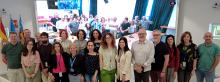
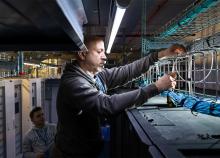
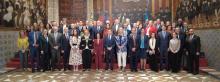
On 9–10 February 2026, the United Nations Global Service Centre (UNGSC) brought together 160 participants from 15 field missions and Headquarters to shape the next phase of the Field Remote Infrastructure Monitoring (FRIM) programme.
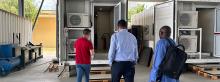
Over recent years, FRIM has expanded across UN missions, using connected sensors to monitor generators, fuel systems, water networks, and environmental infrastructure. This has created a reliable, mission-wide picture of how critical assets perform in real time.

Mapping Together: UN Maps at the Humanitarian Networks and Partnerships Week (HNPW)

Submitted by nestola on

The United Nations Global Service Centre will take part in the 2026 edition of Humanitarian Networks and Partnerships Week (#HNPW), organized by United Nations Office for the Coordination of Humanitarian Affairs (#OCHA) — one of the largest global gatherings focused on solving operational challenges in humanitarian action.

On 5 March | 14:00–15:30 UTC, the UN Maps (on behalf of #UNGSC) team will host a remote session:

From Vision to Impact: Women Shaping UN Digital Operations

Submitted by Nadia Caputo on

At the United Nations Global Service Centre (UNGSC), advancing gender equality in science and technology is not an abstract principle — it is a measurable commitment. Over the past six years, the representation of women among our international staff has steadily increased from 28% in 2021 level to 46.1% on 2026 level (as of January 2026). This consistent upward trend reflects deliberate efforts to foster a more inclusive and balanced workforce across professional grades, strengthening both our operational effectiveness and our organizational culture. 

2nd Digital Twin Workshop - Scaling Digital Twin for Inclusive Innovation: From Prototype to Practice

Submitted by Nadia Caputo on

The Digital Twin Service (DTS) at UNGSC is enhancing how the United Nations plans, manages, and optimizes operations across field missions by creating dynamic, geolocated replicas of real-world environments, enriched with Internet of Things (IoT) and operational data, as well as field observations. This service enables advanced 3D visualization, Augmented Reality / Virtual Reality simulations, and predictive analytics.

UNGSC visits Wuhan University and participates in 2025 Global Conference

Submitted by nestola on

UNGSC recently completed visit to Wuhan University (5–12 November 2025), building on an already productive collaboration that has supported MONUSCO operations in Africa. The University’s research team, led by Prof. Xi Li, previously shared night-time-light analysis data that strengthened UNGSC situational awareness analysis in support of MONUSCO — a concrete example of how academic geospatial expertise can directly support field missions.

Empowerment, Preparedness, and Security with WSAT

Submitted by nestola on

In observance of the International Day for the Elimination of Violence against Women (25 November), the UN Global Service Centre (#UNGSC) was proud to host the Women’s Security Awareness Training (WSAT) — a dedicated learning experience designed to strengthen women’s security awareness, preparedness, and confidence. 

Delivered by certified female security professionals, the training provided tailored guidance on safety, protection, and personal awareness through the lens of the UN Security Policy Framework. 

One UN at the Valencia Digital Summit 2025

Submitted by Nadia Caputo on

For the fourth consecutive year, UNGSC joined UNICEF, UNICC, and IOM at the Valencia Digital Summit (VDS) — one of Europe’s leading technology and innovation events. 
Held at the City of Arts and Sciences under the theme “Collaborate Today”. Transform Tomorrow,” the Summit convened over 12,000 participants from 120 countries, including experts, entrepreneurs, and academia. 

From Sensors to Smarter Missions: How FRIM IoT Is Powering Real-Time Decisions in the Field

Submitted by Nadia Caputo on

In the rugged hills of Dabeiba, Colombia, a field engineer at the UN Mission (UNVMC) checks her tablet before dawn. The power system at one of the mission’s remote monitoring sites used to fail unpredictably—sometimes for hours, cutting off access to essential communications. Today, a quick glance at the FRIM dashboards shows the system running smoothly. The difference? A stream of real-time, quality-controlled data and a Data Quality Index (DQI) that shows how trustable the data is for decision-making.