At the United Nations Global Service Centre (UNGSC), advancing gender equality in science and technology is not an abstract principle — it is a measurable commitment. Over the past six years, the representation of women among our international staff has steadily increased from 28% in 2021 level to 46.1% on 2026 level (as of January 2026). This consistent upward trend reflects deliberate efforts to foster a more inclusive and balanced workforce across professional grades, strengthening both our operational effectiveness and our organizational culture.
Closing the gender gap in Science, Technology, Engineering and Mathematics (STEM) is not only a matter of fairness — it directly affects the quality, resilience, and impact of science and technology solutions worldwide.
At the United Nations Global Service Centre (#UNGSC), technology is not abstract. It enables missions to operate, communicate, and deliver mandates in complex environments.
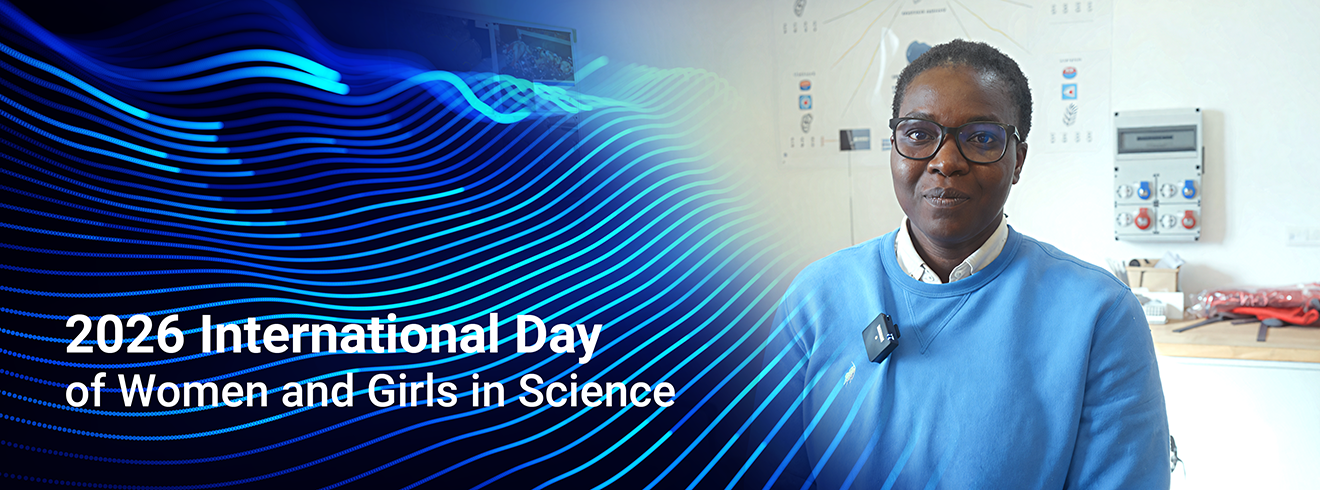
Nana Aichatou Abdou Bakah leads the Performance Monitoring & Optimization (PeMO) team, responsible for monitoring satellite and WAN connectivity to field missions and overseeing private cloud infrastructure performance. Her team ensures that ICT services remain stable, optimized, and aligned with operational needs across multiple UN entities.
In practical terms, this means providing missions with analytical reporting on satellite links utilization and operational status — enabling data-driven decisions on bandwidth allocation, capacity planning, and service optimization. Reliable connectivity is not a technical luxury; it underpins operational continuity in the field.
This expertise was further refined through 12 years of service across three UN missions: MONUSCO (Democratic Republic of the Congo), MINUSMA (Mali), and MINUSCA (Central African Republic). Field environments demand adaptability, collaboration, and technical precision under pressure. They also remain traditionally male-dominated, particularly in ICT roles. Demonstrating competence and leadership in those contexts challenges assumptions and reshapes expectations.
Her path into technology was not linear. Inspired by the transformative power of digital tools in the early 2000s, she pursued a career at the intersection of ICT operations, cybersecurity, governance, and data analysis. Continuous learning, rather than a predefined trajectory, defined her journey.
Why does women representation matter in UN technology roles?
Because digital systems impact people differently across genders, cultures, and operational contexts. Inclusive teams design more resilient, equitable, and effective solutions — particularly in resource-constrained, multicultural mission environments.
Diversity strengthens risk anticipation, improves decision-making, and enhances operational performance.
As we mark the International Day of Women and Girls in Science 2026, the focus shifts from recommendations to visible impact. Women in STEM at UNGSC are not symbols — they are leading complex systems that support peacekeeping and UN operations worldwide.
Nana’s message to young women considering STEM careers:
“I would encourage young women to pursue science and technology with confidence, curiosity and passion. Your presence, ideas, and leadership will not only advance innovation but are also essential to transforming the landscape. Invest in continuous learning and build both technical and soft skills. Technology evolves rapidly, but communication, collaboration, and critical thinking remain essential. Seek mentors, stay curious. Do not underestimate your ability to contribute meaningfully — even early in your career.”
Closing the gender gap in science is not aspirational rhetoric. It is operationally necessary.